GLP-1 and GIP Receptor Biology. What Tirzepatide and Retatrutide Research Tells Us

For Research Use Only. All content is intended for scientific reference only and does not constitute medical advice.
To understand why these compounds are generating so much research interest, you need to understand what incretin receptors are and what happens when you activate more than one at the same time.
Incretins are hormones released by the gut in response to food intake. They signal to the pancreas, liver, brain, and fat tissue to regulate glucose and energy balance. The two most studied incretin receptors in current metabolic research are GLP-1R (glucagon-like peptide-1 receptor) and GIPR (glucose-dependent insulinotropic polypeptide receptor). For decades, most metabolic research focused on GLP-1R alone. Tirzepatide changed that.
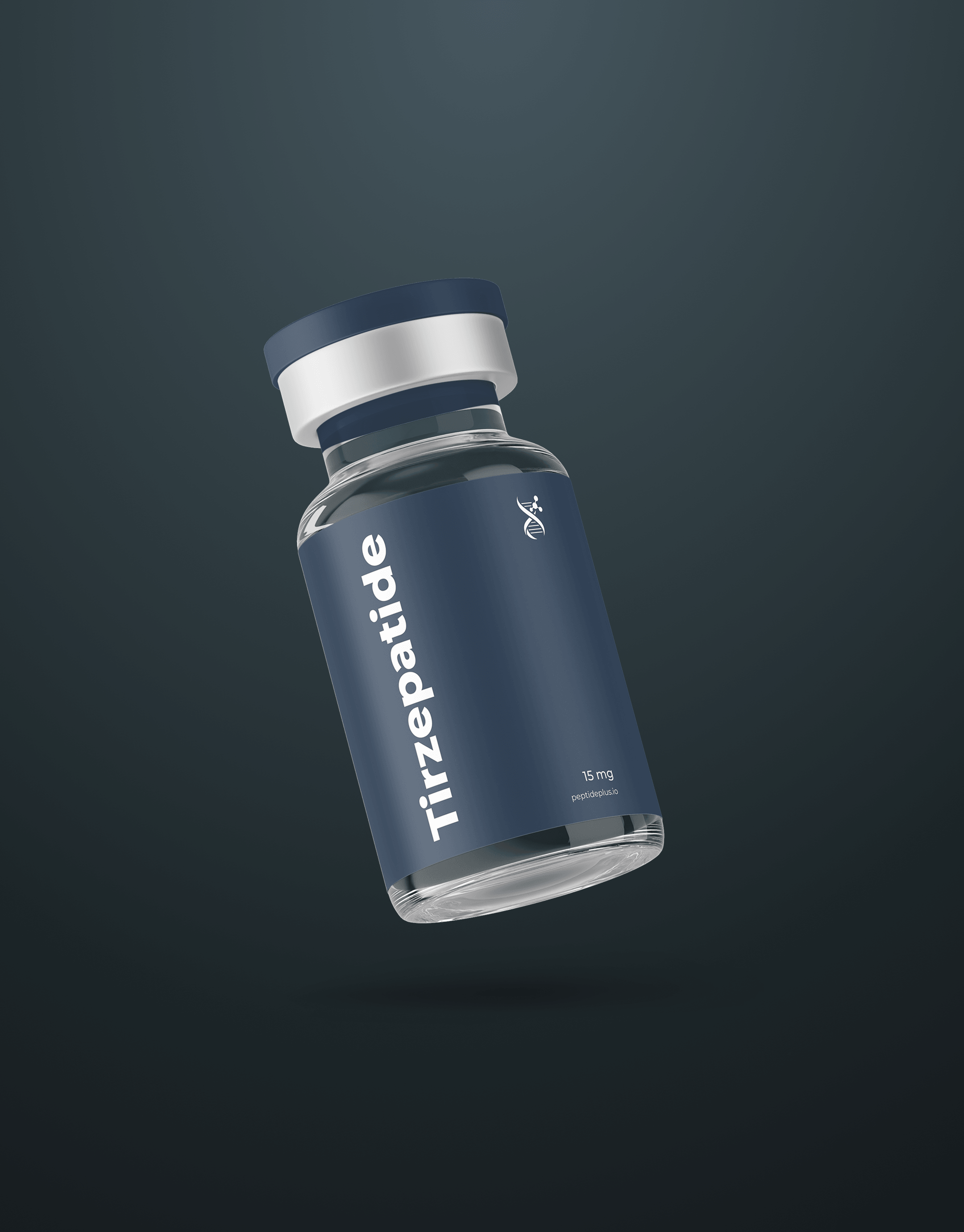
Tirzepatide is a 39-amino acid peptide that activates both GLP-1R and GIPR simultaneously. Critically, it does not activate both receptors equally. Research shows it engages the GIP receptor with greater potency than the GLP-1 receptor, and at the GLP-1 receptor it shows signalling bias toward cAMP generation rather than beta-arrestin recruitment. This imbalanced profile is not a flaw in its design. Researchers believe it is precisely what gives it a distinct pharmacological character compared to GLP-1 mono-agonists like semaglutide.
GIPR activation adds several mechanisms that GLP-1R agonism alone does not produce. It enhances glucose-stimulated insulin secretion in a glucose-dependent manner, meaning it amplifies insulin release only when blood glucose is elevated. Cell culture data has shown GIPR signalling promotes fatty acid uptake and storage in subcutaneous depots, potentially redirecting lipid flux away from visceral and ectopic sites such as the liver and muscle. GIPR expression has also been identified in the hypothalamus and brainstem, where rodent studies have documented feeding behaviour modulation independently of peripheral metabolic inputs. This is a neuroendocrine dimension that GLP-1R agonism alone does not replicate.
Retatrutide adds a third receptor to this picture: GCGR, the glucagon receptor. Glucagon is typically thought of as the hormone that raises blood glucose, the counter-regulatory signal to insulin. But at the receptor biology level, glucagon receptor activation also directly increases hepatic fat oxidation and energy expenditure in ways that GLP-1 and GIP engagement alone do not produce. Cryo-electron microscopy studies have mapped how retatrutide activates all three receptor types as a single molecule simultaneously, making it the most pharmacologically comprehensive metabolic compound currently in late-stage research.
The clinical research data developing around both compounds is significant. In Phase 2 trials, retatrutide produced up to an 82 percent reduction in liver fat in metabolic liver disease models. Phase 3 TRIUMPH-1 topline data released in May 2026 showed 28.3 percent mean weight reduction at 80 weeks at the 12mg dose. Seven additional Phase 3 trials are expected to complete across 2026. As of June 2026, retatrutide has no approved therapeutic indication in any regulatory territory.
Tirzepatide remains the more characterised of the two for comparative receptor research. Retatrutide represents the current frontier of incretin receptor biology, and the pace of published data around it is accelerating rapidly.
Peptide Plus supplies both Tirzepatide and Retatrutide in independently tested, batch-documented formats for use in research protocols.
References
Willard FS et al. JCI Insight. 2020. PMC7526454
Structural insights into dual incretin receptor agonism by tirzepatide. PMC9060465
Structural insights into triple agonism by retatrutide. PMC11255275
Retatrutide for MASLD. Nature Medicine. 2024
Triple agonism based therapies for obesity. PMC12304053
TRANSCEND-T2D-1 Phase 3 trial. ScienceDirect. 2026
TRIUMPH-1 Phase 3 topline. Remy Peptides. May 2026


.png)