BPC-157 and TB-500. What the Research Says About Cellular Repair
.png)
For Research Use Only. All content is intended for scientific reference only and does not constitute medical advice.
BPC-157 and TB-500 are often studied together, but they are very different compounds. BPC-157 is a synthetic 15-amino acid peptide derived from a protein found naturally in gastric juice. TB-500 is a synthetic fragment of Thymosin Beta-4, a protein produced throughout the body. One acts locally. The other distributes systemically. Together they cover a broad range of cellular repair research applications and represent one of the most-cited peptide pairings in preclinical tissue biology.
BPC-157 acts primarily at the site of tissue disruption. It regulates nitric oxide synthesis in a context-dependent way, supporting local blood flow in repair models. It increases expression of VEGF and FGF, two proteins central to tissue regeneration research. In tendon repair models, it has been shown to accelerate structural recovery and improve collagen organisation compared to controls.
One of the more notable findings in BPC-157 research is its apparent activity in the central nervous system. Studies in rodent models suggest it interacts with dopaminergic and serotonergic pathways, possibly via vagal afferents, positioning it as one of the few repair compounds with both peripheral and central activity. Given its gastric origin, it also shows particularly strong activity in GI research models. A 2025 commentary described BPC-157 as an almost ubiquitous pleiotropic polypeptide with cytoprotective properties across multiple organ systems.
TB-500 operates at a systemic level through a different mechanism entirely. Its core action is binding G-actin monomers, which prevents premature actin polymerisation and allows controlled cellular migration during repair processes. It is also a potent inducer of angiogenesis. In cardiac research models, Thymosin Beta-4 produced measurable neovascularisation of infarct tissue and improved cardiac function. Preclinical studies have also shown TB-500 reduces neuronal apoptosis and promotes remyelination in brain injury models.
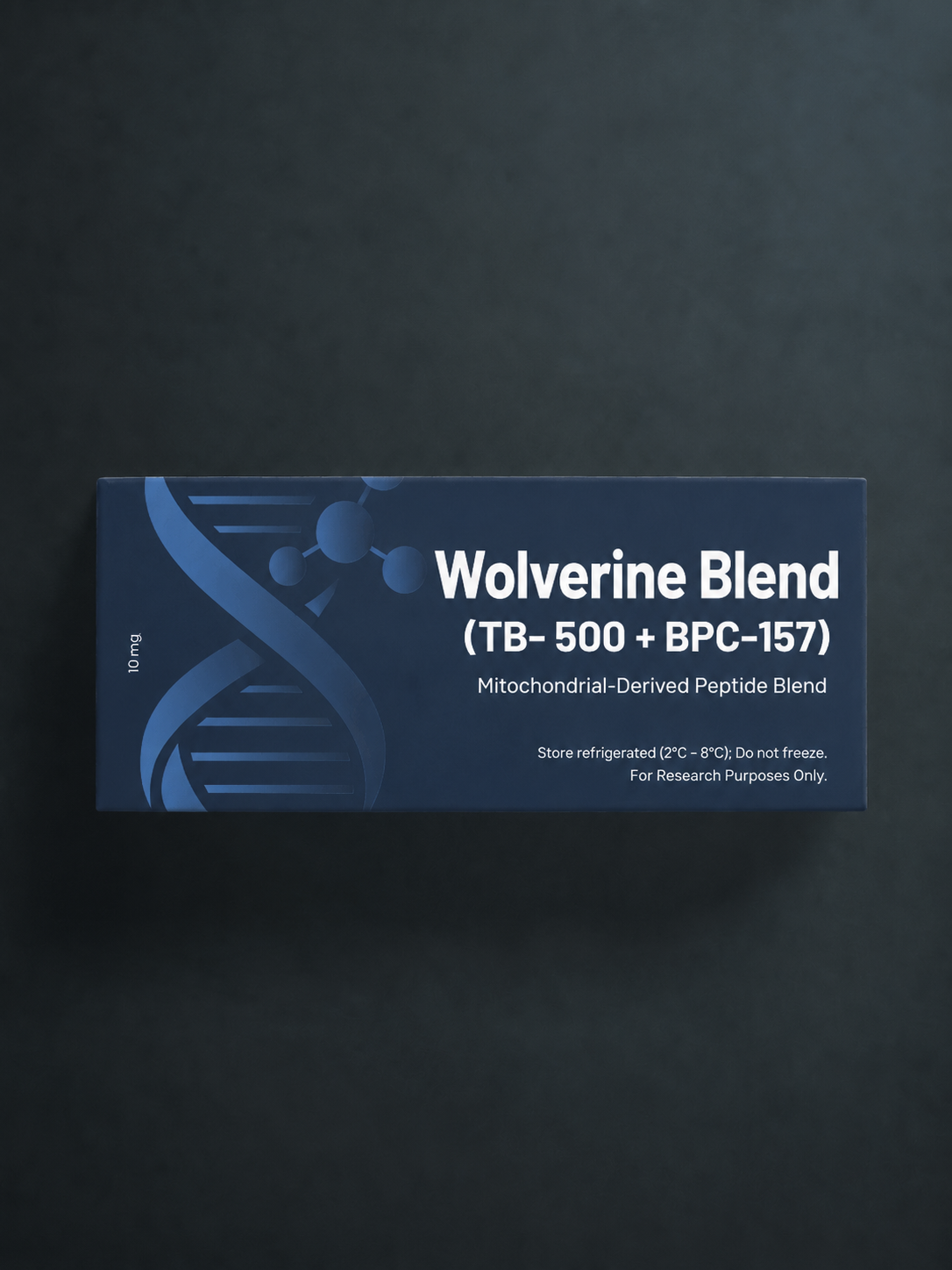
Because they target separate but complementary pathways, researchers have hypothesised that together they may cover more of the repair cascade than either compound alone. There is no known pharmacological conflict between them. Peptide Plus supplies both compounds independently and as the Wolverine Blend, a pre-combined format for research protocols studying their combined mechanisms.
A 2025 systematic review confirmed BPC-157 as one of the most extensively characterised repair peptides in preclinical science. A 2026 review further contextualised the growing research base for peptide compounds in musculoskeletal biology. A December 2025 scoping review also noted that all published BPC-157 studies to date report positive preclinical effects, while flagging the need for independent replication and broader clinical trial data.
It is worth being clear about where the evidence stands. BPC-157 has extensive preclinical data and Phase II trials have been initiated, but it does not yet have approved therapeutic indications. As of early 2026, three published research studies involving BPC-157 exist. TB-500 has strong preclinical data, particularly in cardiac and neurological models, but human clinical trial data remains limited. Both compounds are investigational. The science is advancing but remains primarily preclinical.
Researchers looking for independently verified, batch-tested sources can view our BPC-157 and TB-500 product pages for full certificates of analysis and lot documentation.
References
Gwyer D et al. Cell Tissue Res. 2019. PMID: 30832290
Sikiric P et al. Curr Neuropharmacol. 2014. PMID: 27071817
Sikiric P et al. Curr Pharm Des. 2011. PMID: 25379541
Huang MH et al. Eur J Pharmacol. 2019. PMID: 29997137
Zhu J et al. Restor Neurol Neurosci. 2021. PMID: 33450021
Whitehouse M. Inflammopharmacology. 2025. PMC12396989
Vasireddi N et al. HSS Journal. 2025. PMID: 40756949
Mayfield CK et al. Am J Sports Med. 2026. PMID: 41476424